
Power Motion: Middleware Development & Shopify Integration Case Study
Power Motion and Industrial Supplies

Power Motion: Middleware Development & Shopify Integration Case Study
Introduction
Power Motion, a leading North American industrial supplies distributor, faced significant challenges managing a vast product catalog exceeding one million SKUs sourced from SMC USA. The complexity of updating product details, pricing, and inventory in real time across systems threatened operational efficiency and customer experience on their Shopify-based e-commerce platform.
To overcome these challenges, Power Motion partnered to develop a scalable middleware solution that automates the import and synchronization of supplier CSV and XML data into Shopify, creating dynamic configurable products and ensuring real-time inventory accuracy. This integration improved operational throughput, reduced manual errors, and enhanced customer engagement through a custom-built product configurator.
The project was executed over an eight-week timeline and delivered significant process automation, improved data integrity, and positioned Power Motion for scalable, next-gen B2B digital commerce growth.



Business Challenges
Power Motion’s e-commerce growth was constrained by multi-dimensional technical hurdles:
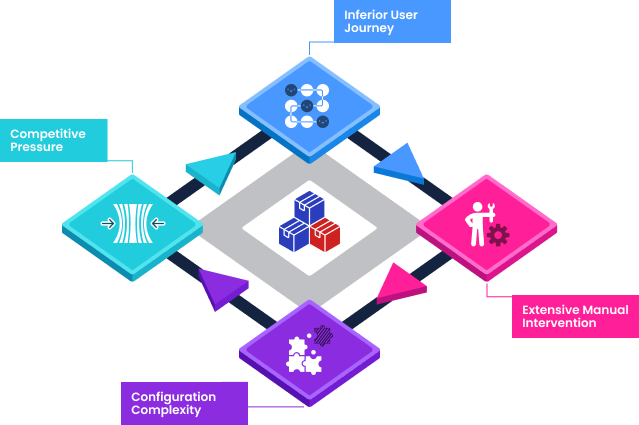
- Volume and Complexity of Data: With over 1 million SKUs updated frequently via supplier CSVs, batch imports required custom queuing, chunking, and error-resilient logic to avoid API throttling or process failures. Native Shopify imports couldn't scale for such volume; custom middleware was essential to reliably synchronize this scale of catalog and inventory.MLVeda-Power-Motion-and-Industrial-Supplies-Middleware-Development-Shopify-Integration-1.pdf+1
- Configurable Products and Data Hierarchy: Supplier product options appeared only in layered XML data (categories, sub-categories, specs), making mapping into Shopify’s flat variant architecture and metafields technically complex. Without middleware, variant creation and product configurators could not be dynamically generated nor accurately reflect inventory status.Power-Motion-Requirements-and-Solution.pdf+1
- Integration Latency and Synchronization: Legacy data flows resulted in multi-hour lags for pricing or availability updates. This created risk of overselling, out-of-stock scenarios, and price misalignment between Shopify and ERP or supplier databases. Smooth, near-real-time bidirectional sync required robust API orchestration and scheduler resiliency.MLVeda-Power-Motion-and-Industrial-Supplies-Middleware-Development-Shopify-Integration-1.pdf
- Manual Workflow Bottlenecks: Manual uploads, corrections, and inconsistent status reporting led to operational blind spots. Automated reporting, workflow monitoring, and error notification modules were needed to guarantee reliability.
- Performance and Customization Pressure: Extensive customizations (configurator, filters, dynamic templates) caused page load concerns. Solutions needed Shopify Liquid language based components, optimized CDN/image handling, and robust backend caching to prevent site slowdowns or scalability issues.
- Security and Compliance: Handling external supplier data and customer transactions demanded SSL/TLS encryption, RBAC access controls, and adherence to GDPR/CCPA for data handling and auditability.
Solution Architecture
The technical architecture for Power Motion’s middleware integration is outlined below:
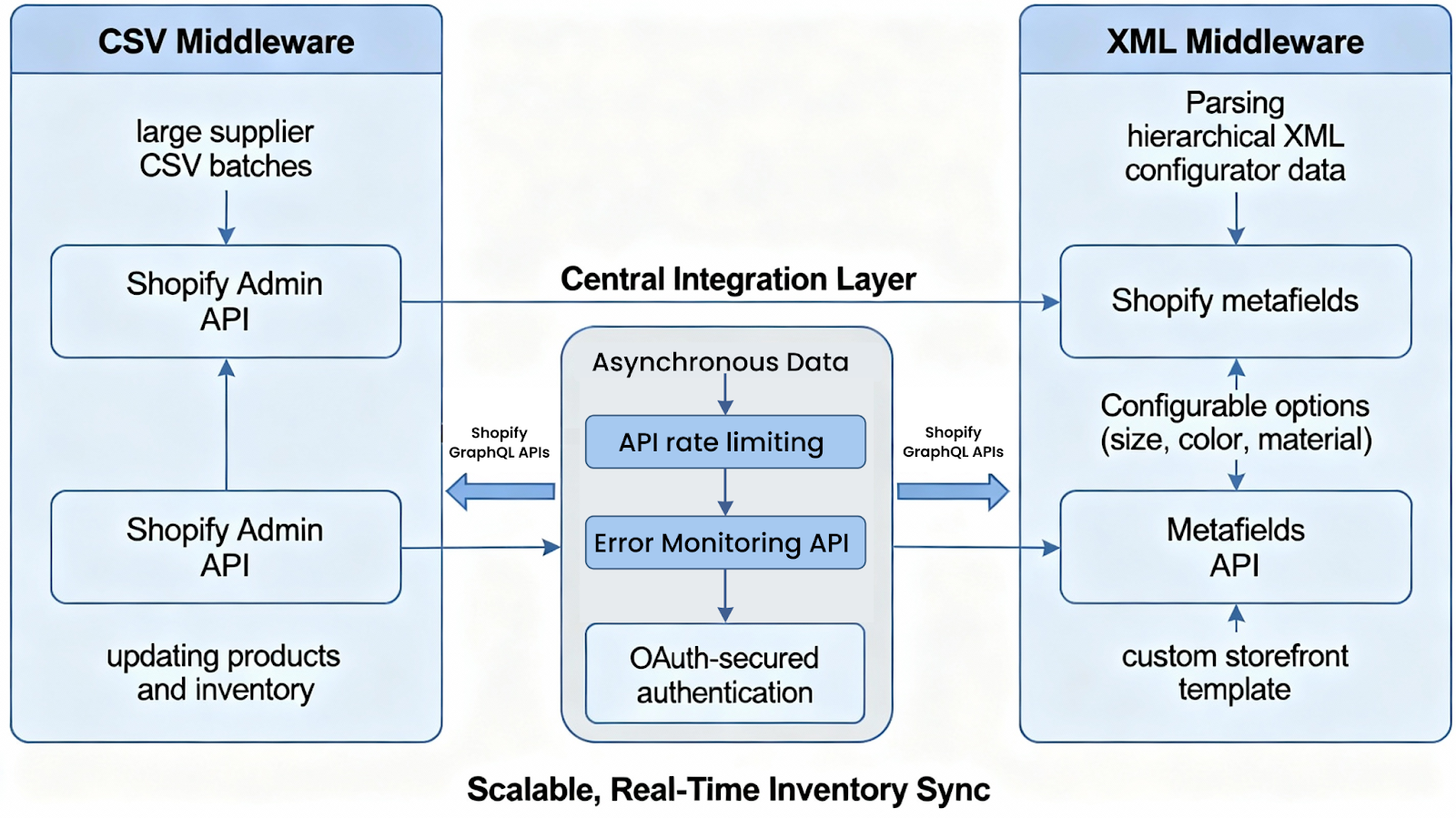
- Dual Middleware Pipelines:
- CSV Pipeline: Utilizes NodeJS backend to process bulk supplier CSVs via chunked, queued uploads, with robust validation and retry logic. Automatically updates Shopify product and inventory records using batched Admin API calls and respects Shopify rate limits. Error logs generate alert emails to stakeholders after each upload, enabling immediate correction cycles.Power-Motion-Requirements-and-Solution.pdf
- XML Pipeline: Parses layered XML product option data (categories → specs → values), applies XSLT/XPath transformations, and maps to custom Shopify metafields for true configurable variant creation. Maintains category and subcategory hierarchies within Shopify’s limited structure using metafields and dynamic template rendering.MLVeda-Power-Motion-and-Industrial-Supplies-Middleware-Development-Shopify-Integration-1.pdf+1
- Integration Pattern:
- API-First Design: All data flow leverages Shopify GraphQL APIs for product, inventory, and metafield management. OAuth 2.0 secures authentication, and all connections are encrypted by SSL/TLS.MLVeda-Power-Motion-and-Industrial-Supplies-Middleware-Development-Shopify-Integration-1.pdf
- React-Based UI Modules: Product configurator, XML uploader, and email notifier are custom React components for superior UX, with AJAX-powered dynamic updates and automated error notification.
- Automated Reporting: Upon completion of uploads (CSV/XML), middleware generates and emails a summary of successful and failed entries, ensuring full transparency.Power-Motion-Requirements-and-Solution.pdf
- Performance Optimization:
- Chunked Batch Processing: Limits payload per API call, prevents Shopify throttling, scales horizontally as product volume grows.
- Caching and CDN Enhancement: Leverages Shopify CDN and server-side caching for images/configurator assets to keep site performance at peak levels, with dynamic load testing at scale.Power-Motion-Requirements-and-Solution.pdf
- Auto-Scaling and Monitoring: NodeJS middleware designed for autoscaling, with real-time alerts for system failures or latency spikes.
- Security and Governance:
- Role-based access control ensures only permitted staff perform uploads and config changes.
- Compliance with GDPR/CCPA via audit logging and encrypted credentials.
- Automated backup and rollback mechanisms for critical data flows during batch updates.
Key Technical Components:
Integration Architecture:
- Asynchronous data pipelines ensure efficient, non-blocking processing of large SKU and configurator datasets.
- OAuth 2.0 secured GraphQL API integration maintain robust, rate-limited connectivity with Shopify services.
- Real-time error monitoring and automated retry mechanisms provide high availability and seamless data synchronization.
These focus areas highlight architecture scalability, security, and operational resilience consistent with the detailed middleware design.
Implementation Methodology
This detailed, best-practice-driven, and collaborative implementation approach ensured timely delivery, quality outcomes, and minimized disruption while maintaining agility to adapt to business and technical nuances.
Quantified Business Results:
The implemented middleware solution delivered over 90% reduction in manual product updates, transforming operational efficiency and significantly accelerating time-to-market for new SKUs.
Strategic Best Practices & Executive Takeaways:
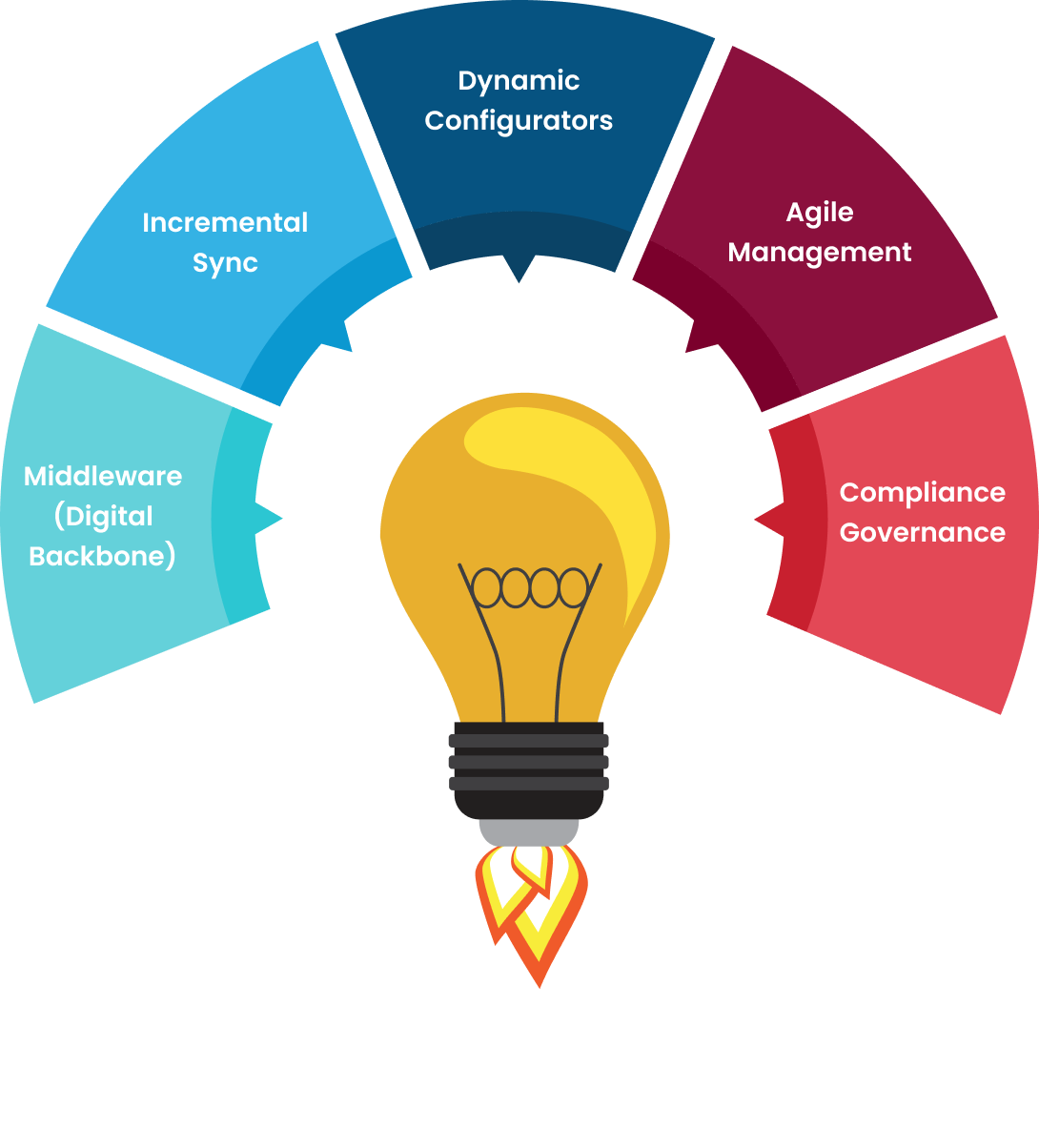
- Middleware acting as a digital backbone between legacy data feeds and Shopify enables scalable commerce modernization without vendor lock-in.
- Imitigates performance bottlenecks inherent in bulk data imports.
- Dynamic product configurators built on Shopify metafields empower superior B2B customer experiences essential for competitive differentiation.
- Agile project management with iterative feedback and stakeholder engagement is critical to managing complex integration initiatives.
- Compliance and security built into middleware workflows ensure enterprise-grade data governance in digital commerce transformations.
Strategic Conclusion
Power Motion’s middleware-driven integration approach has established a new enterprise standard for handling massive supplier catalogs and delivering configurable B2B commerce on Shopify. By bridging legacy data complexities with modern commerce platforms, Power Motion has achieved operational excellence, enriched customer engagement, and a scalable foundation for future innovation.
Enterprise leaders evaluating digital commerce modernization will find Power Motion’s strategic middleware framework a compelling blueprint that balances technical sophistication with pragmatic business outcomes. This project highlights the critical importance of integration depth, automation, and customer-centric configurability for digital transformation success in enterprise e-commerce.
MLVeda invites similar enterprises to leverage this proven approach for accelerated Shopify ecosystem adoption and sustained ROI growth.
We’re Listening
Whether you're exploring strategic transformation opportunities or seeking a partner to architect and execute enterprise technology initiatives, we're here to help. Reach out to our team at services@mlveda.com or complete the form to begin the conversation.

